Quick verdict
A 100W label does not automatically make a power bank right for every laptop. It only tells you the charging class. The laptop still needs to support USB-C charging, the cable needs to support the wattage, and the power bank needs to deliver enough power from the port you actually use.
If you are not sure whether your laptop can charge from a power bank at all, start with the guide to checking laptop power bank compatibility. If you are still deciding between lower and higher wattage, read the 65W vs 100W power bank comparison.
Quick picks
Use these picks as shortcuts. The right 100W power bank depends on whether you care most about size, built-in cables, capacity, or extra output headroom.
For a broader list that includes 140W, 165W, and premium high-output models, see the main best laptop power banks guide.
Comparison table
The useful difference between these products is not only the headline wattage. Look at capacity, cable setup, and whether the power bank is meant to be compact, simple, high-capacity, or premium.
| Ref | Product | Capacity | Max output | Best for |
|---|---|---|---|---|
| 1 | UGREEN Nexode 20,000mAh 100W Power Bank | 20,000mAh | 100W | Best overall 100W pick |
| 2 | Baseus 100W Power Bank 20,000mAh | 20,000mAh | 100W | Slimmer 100W laptop charging setup |
| 3 | CUKTECH 100W Power Bank 10,000mAh | 10,000mAh | 100W | Compact 100W carry |
| 4 | INIU 100W Fast Charging Power Bank 25,000mAh | 25,000mAh | 100W | High-capacity 100W laptop charging |
| 5 | AOHI 25,200mAh 170W Laptop Power Bank | 25,200mAh / 90.72Wh | 170W total | Premium 100W+ multi-device headroom |
How to choose a 100W USB-C power bank
Start with the laptop charger. If the original charger is 45W or 65W, a 100W power bank gives comfortable headroom. If the original charger is 90W or 100W, a 100W power bank is usually the correct class to consider first. If the laptop charger is above 100W, a 100W power bank may still help, but it may not behave like the wall charger under load.
Then check the cable. A weak USB-C cable can make a good 100W power bank look broken. If the power bank includes a cable, read the listing carefully. If you use your own cable, make sure it is rated for the charging level you expect.
Capacity is the next decision. A 10,000mAh 100W power bank can be excellent for compact carry and emergency top-ups, but it will not give the same laptop runtime as a 20,000mAh or 25,000mAh model. A 25,000mAh battery is more useful for longer travel days, but it is also larger.
Finally, think about how many devices you charge at once. A power bank may deliver high output to one laptop, then reduce laptop output when a phone, tablet, or second USB-C device is connected. If multi-device charging is part of the plan, do not judge by the single-port number alone.
Best overall 100W
UGREEN Nexode 20,000mAh 100W Power Bank
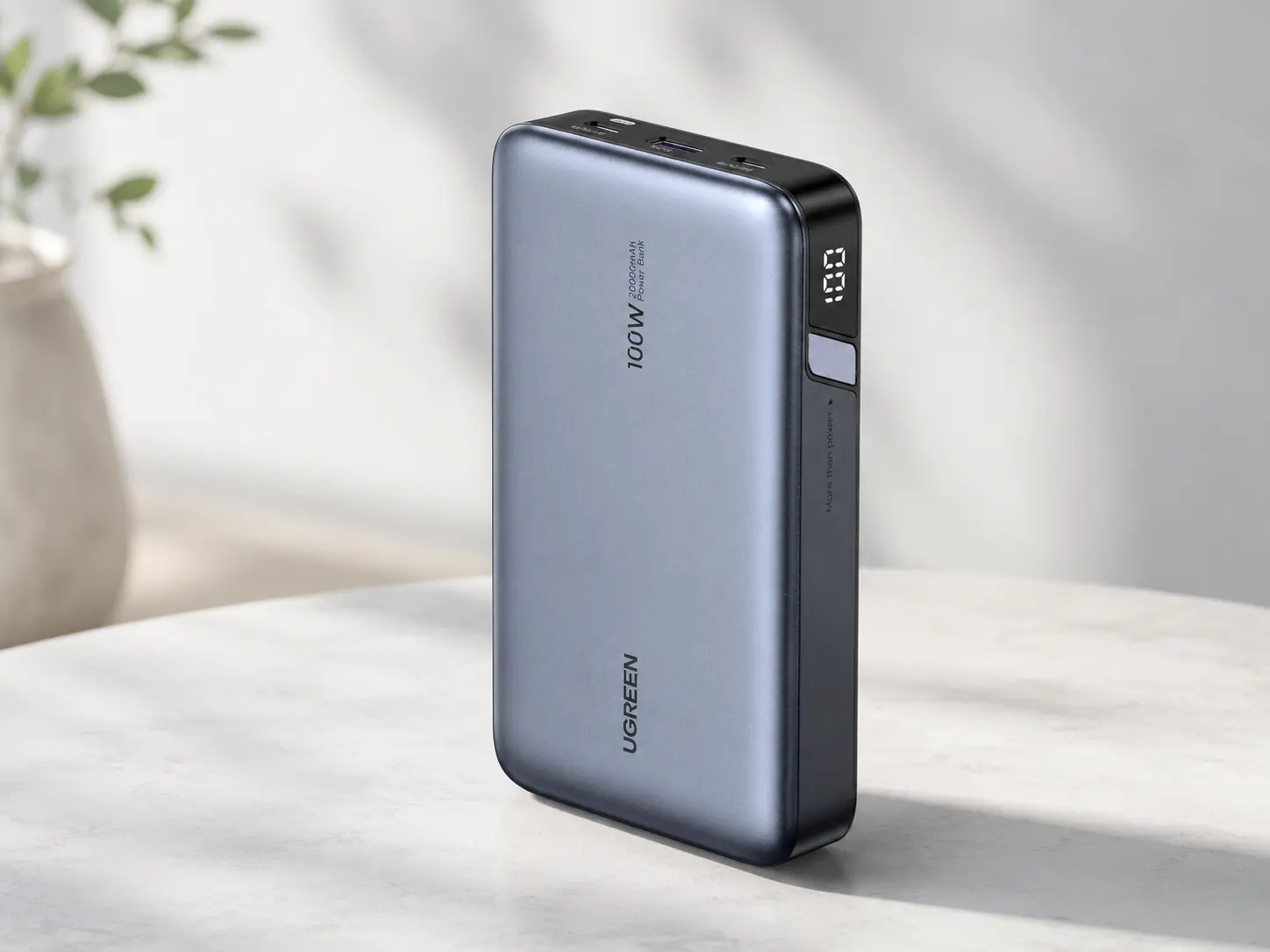
A clean 100W USB-C power bank for laptop users who want a straightforward 20,000mAh option without moving into larger 25K batteries.
BrandUGREEN
Power
- Capacity
- 20,000mAh
- Max output
- 100W
- Recharge note
- 65W recharge support
Ports and cable
- Port layout
- 2 USB-C ports and 1 USB-A port
- Display
- Digital display
- Cable note
- Laptop charging should use the included USB-C to USB-C cable or a 5A / 100W USB-C cable.
Fit
- Best for
- Users who want a straightforward 20,000mAh 100W USB-C power bank for laptops, tablets, and phones
- Not ideal for
- Users who want built-in cables or more than 100W total output for heavier multi-device setups
Pros
- Clean 100W output class for many USB-C laptops
- 20,000mAh capacity keeps it more portable than larger 25K models
- Simple 3-port layout with digital display
Cons
- No built-in cable convenience like some travel-focused models
- 65W recharge is useful but not the fastest in this class
- Not the best choice for users who need more than 100W headroom
The UGREEN Nexode 20,000mAh 100W is the best overall pick for this narrower 100W list because it does not need a complicated explanation. It is a classic 20,000mAh USB-C power bank with 100W output, a simple multi-port layout, and a digital display.
That makes it a good fit for people who want a laptop-ready power bank without jumping into larger 25K models or premium multi-device batteries. It is easier to recommend for everyday laptop bags, short trips, office work, travel days, and users who want one battery for a laptop, phone, and tablet.
The main limitation is cable convenience. Unlike built-in-cable models, this style still depends on carrying the right USB-C cable. That is not a dealbreaker. In fact, replaceable cables can be better long term. But it does mean the cable should be treated as part of the setup, not an afterthought.
Choose it if you want a clean 100W power bank with a sensible capacity. Skip it if built-in cables are the main feature you want, or if you need more than 100W output headroom for heavier devices.
Before buying, check recent Amazon reviews for real carry size, heat, cable behavior, and whether laptop users with similar devices report stable charging.
Best value with built-in cables
Baseus 100W Power Bank 20,000mAh
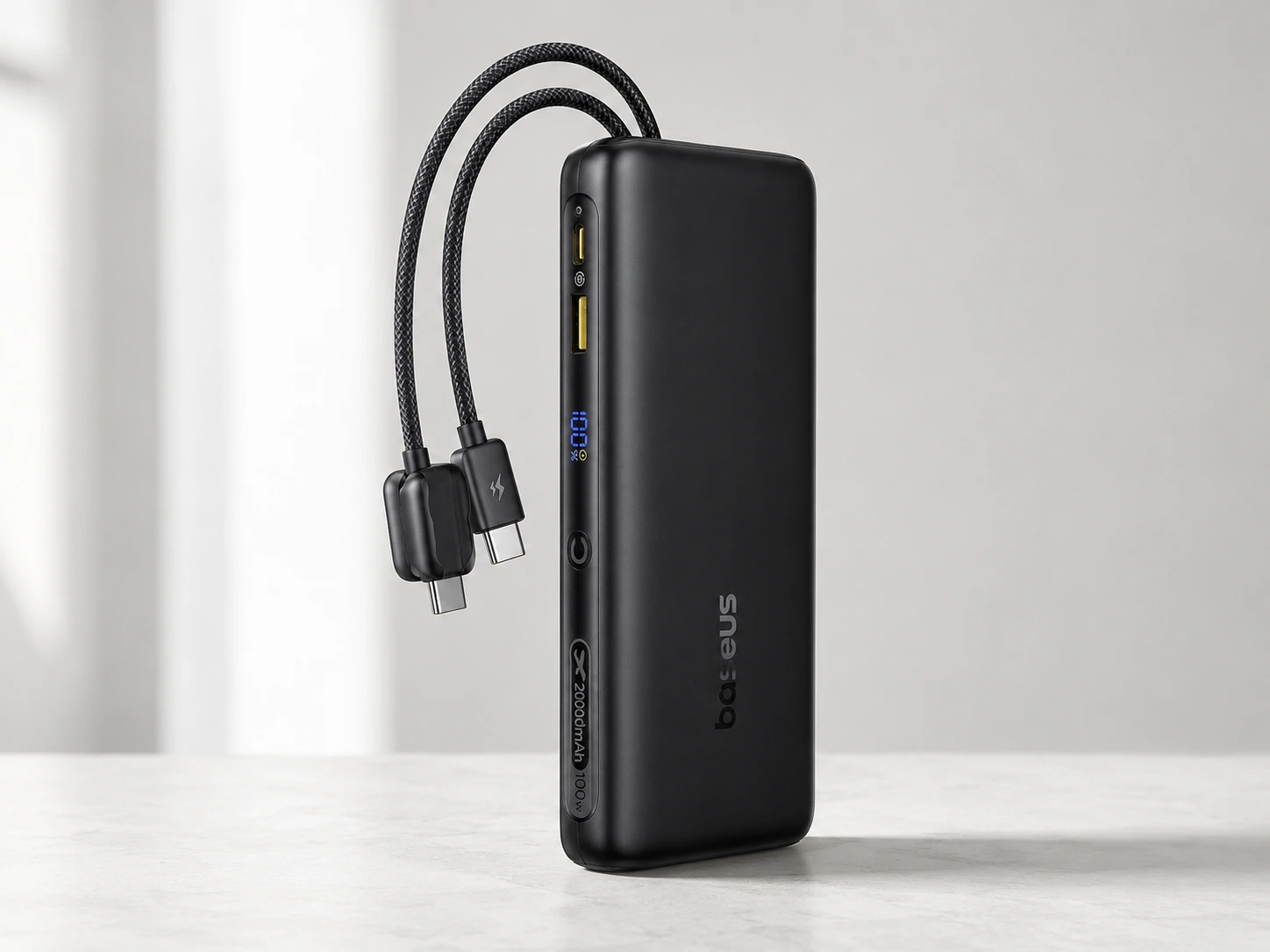
A practical 100W-class option for laptop users who want a smaller 20,000mAh power bank instead of a larger 25K–27K model.
BrandBaseus
Power
- Capacity
- 20,000mAh
- Max output
- 100W
- Output class
- Better suited for many 65W–100W USB-C laptop setups than basic phone power banks
Ports and cable
- Cable setup
- Built-in dual USB-C cables
- Cable note
- Useful for reducing cable clutter, but laptop charging still depends on USB-C PD compatibility.
Fit
- Best for
- Users who want a more compact 100W-class laptop power bank
- Not ideal for
- Users who need the largest possible capacity or sustained high-output workstation charging
Pros
- Practical 100W output class for many USB-C laptops
- 20,000mAh capacity keeps it more manageable than larger 25K–27K models
- Built-in cable design can be convenient for travel
Cons
- Less capacity than 25,000mAh and 27,000mAh options
- May not be ideal for heavier laptops that expect more sustained high wattage
- Confirm port behavior before buying
The Baseus 100W Power Bank 20,000mAh stays in this article because it solves a different problem than the UGREEN. It is not just another 20,000mAh 100W battery. Its main appeal is the built-in USB-C cable setup.
That matters for travel and daily carry. A 100W power bank is only useful for a laptop if the right cable is available. Built-in cables reduce that failure point. For people who often forget cables, switch bags, or work away from a fixed desk, this is a real advantage.
The tradeoff is flexibility. A separate cable can be replaced. A built-in cable is part of the product. If cable durability is a concern, read reviews carefully before buying.
Choose it if you want 100W-class laptop charging with less cable clutter. Skip it if you prefer fully replaceable cables or want the most classic power bank design.
Before buying, check reviews for built-in cable durability, heat during laptop charging, and how the power bank behaves when a laptop and phone are connected together.
Best compact 100W
CUKTECH 100W Power Bank 10,000mAh
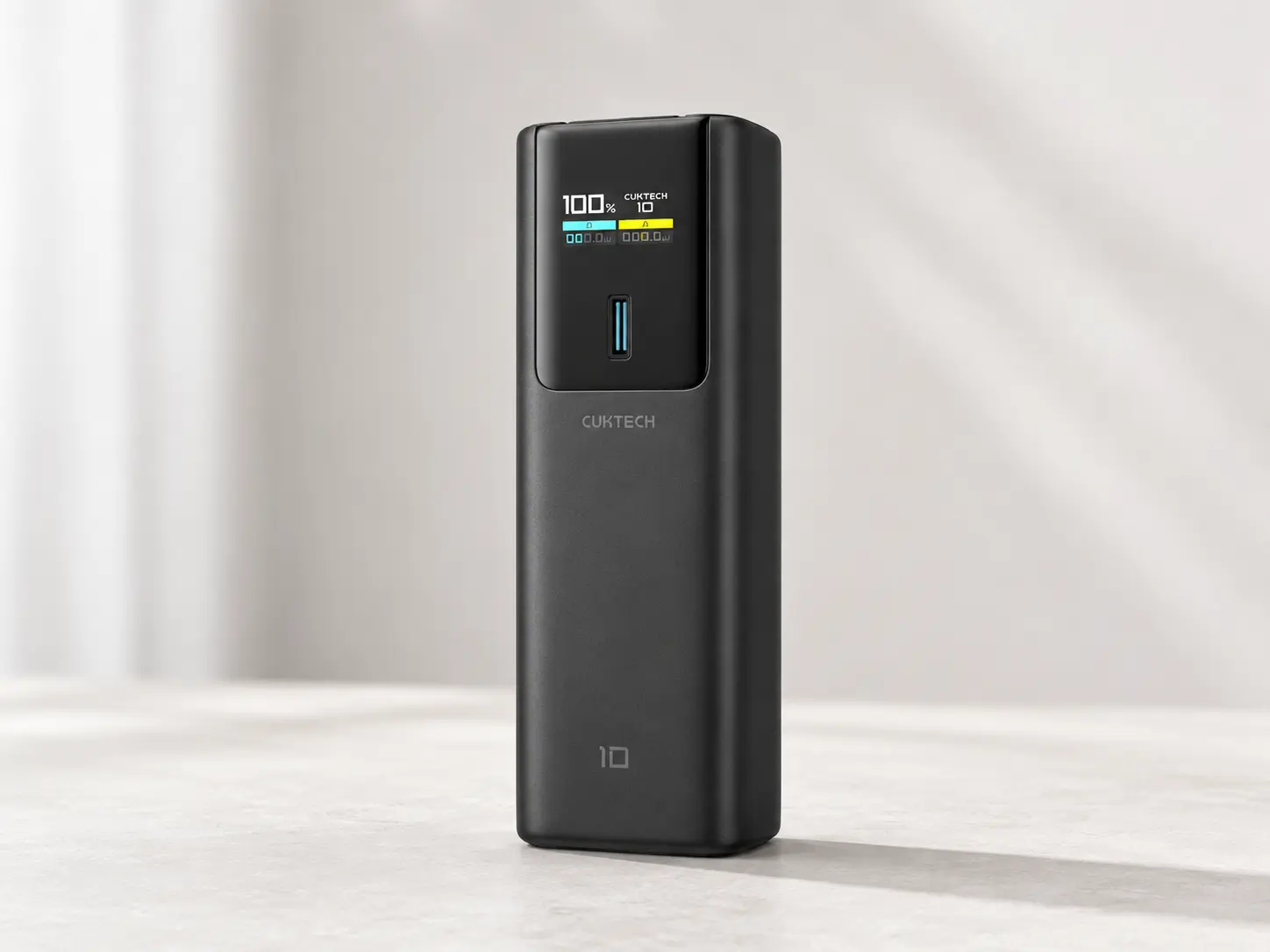
A compact 100W-class option for users who care more about carry size than all-day laptop runtime.
BrandCUKTECH
Power
- Capacity
- 10,000mAh
- Max output
- 100W max USB-C output
- Self-charging
- 90W max rapid self-charging
Ports and display
- Connector type
- USB-C and USB-A
- Display
- Smart TFT display
- Cable note
- Use a PD charger and the included 6A cable for optimal charging speeds.
Fit
- Best for
- Short laptop top-ups, compact bags, tablets, phones, and users who do not want a large 20K–25K battery
- Not ideal for
- Long laptop sessions away from outlets or users who need maximum capacity
Pros
- Much more compact than most laptop-focused power banks
- 100W output class in a 10,000mAh size
- Smart TFT display helps show charging behavior
Cons
- 10,000mAh capacity is limited for laptop runtime
- Better for top-ups than long off-grid laptop work
- May not be the best value if capacity matters more than size
The CUKTECH 10,000mAh 100W is the most different product in this list. It is not trying to win on capacity. Its value is that it brings 100W-class output into a much smaller battery.
That makes it useful for people who want emergency laptop charging without carrying a large 20,000mAh or 25,000mAh pack every day. It is also a good fit for tablets, phones, handhelds, and short laptop sessions where size matters more than runtime.
The limitation is obvious: 10,000mAh is not much for laptop work. It may save a meeting, add a useful top-up, or keep a light laptop going longer, but it is not the best choice for long work sessions away from outlets.
Choose it if compact size is the priority. Skip it if you expect a power bank to meaningfully extend a full laptop workday.
Before buying, check reviews for real laptop runtime, display accuracy, heat, and whether the included cable works well for the devices you use.
Best high-capacity 100W
INIU 100W Fast Charging Power Bank 25,000mAh
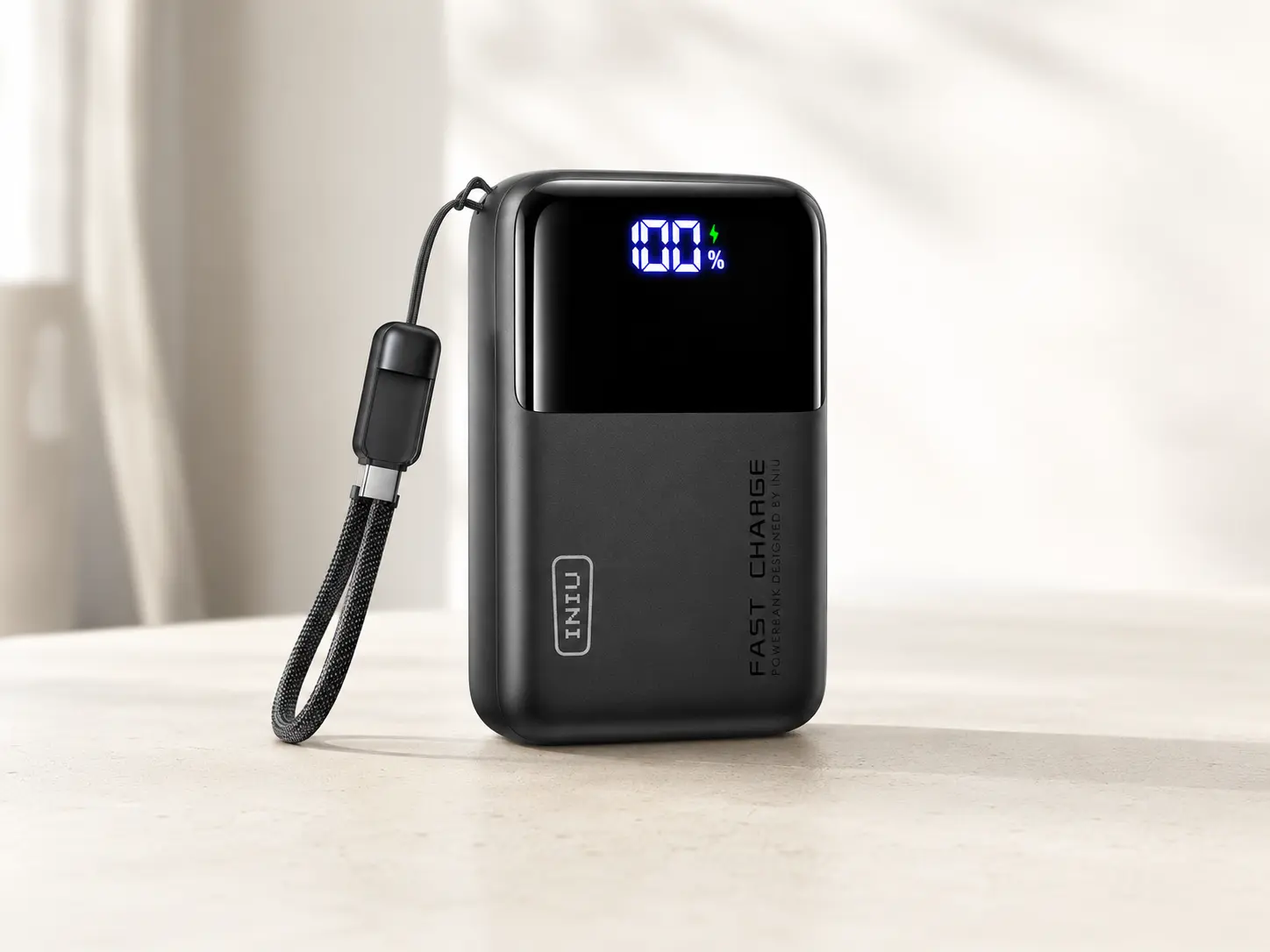
A 25,000mAh 100W option for users who want more reserve capacity without jumping to a 140W or 165W model.
BrandINIU
Power
- Capacity
- 25,000mAh
- Max output
- 100W output
- Weight note
- About 14oz / 400g
Ports and cable
- Port layout
- 2 USB-C outputs and 1 USB-A output
- Cable setup
- Detachable 100W USB-C cable included
- Display
- Digital display
Fit
- Best for
- Users who want a larger 100W battery for laptops, handheld gaming, tablets, and travel
- Not ideal for
- Users who want the smallest possible 100W power bank
Pros
- Higher 25,000mAh capacity than most compact 100W options
- 100W output class works for many USB-C laptop setups
- Detachable cable avoids the risk of relying only on a fixed built-in cable
Cons
- Larger than 10,000mAh and 20,000mAh options
- Not as much output headroom as 140W or 165W models
- Check current listing and reviews for real carry size and heat under load
The INIU 25,000mAh 100W is the capacity-focused option in this list. It is for people who already know they want 100W charging, but do not want the shorter runtime of a compact 10,000mAh battery or the smaller reserve of some 20,000mAh models.
This makes sense for travel days, longer café work sessions, handheld gaming, tablet use, and people who carry more than one USB-C device. It is still a 100W-class power bank, not a 140W or 165W upgrade, so the main appeal is reserve capacity rather than extreme output.
The detachable cable is also a useful middle ground. It avoids the risk of relying only on a built-in cable, while still giving buyers a cable path out of the box.
Choose it if runtime matters more than compact size. Skip it if the laptop setup needs more than 100W headroom or if you want the lightest possible battery.
Before buying, check reviews for actual carry weight, heat, cable quality, and how well it handles laptop plus phone charging.
Best premium 100W+ headroom
AOHI 25,200mAh 170W Laptop Power Bank
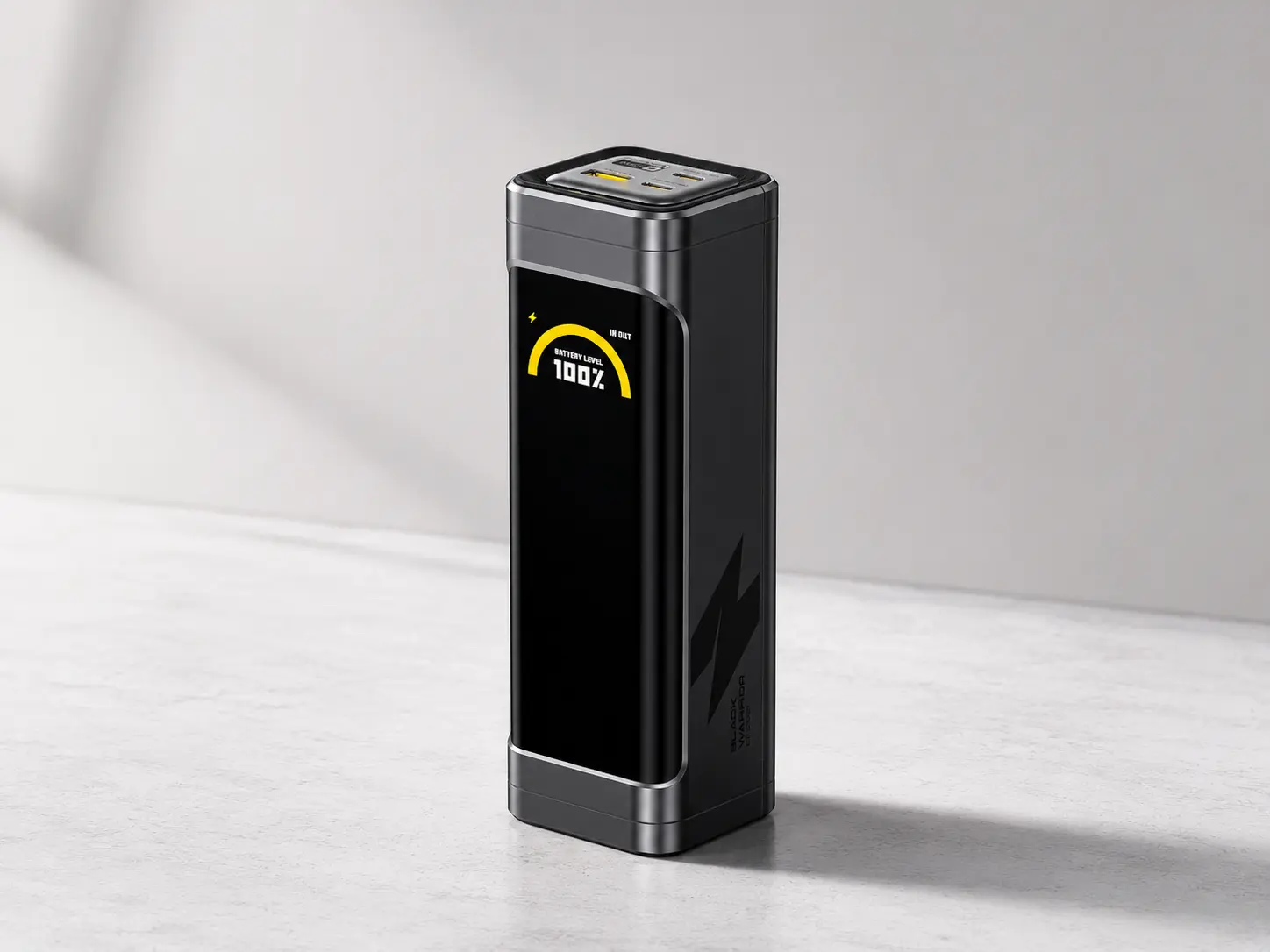
A premium 100W-max power bank with extra total-output headroom for users who charge a laptop plus other devices.
BrandAOHI
Power
- Capacity
- 25,200mAh
- Rated energy
- 90.72Wh
- Max output
- 170W total
- USB-C output
- 100W max USB-C PD
Ports and charging
- Multi-device output
- Two-laptop charging behavior at 100W + 70W
- Recharge note
- 100W fast recharge
- Included cable
- 140W USB-C cable included
Fit
- Best for
- Remote workers, creators, and users who want more headroom than a basic 100W battery
- Not ideal for
- Users who want the lightest or simplest 100W power bank
- Travel note
- 90.72Wh is below the common 100Wh airline threshold, but airline rules should still be checked before flying.
Pros
- 170W total output gives more room for multi-device workflows
- 100W max USB-C PD fits many laptop charging setups
- 90.72Wh rating keeps it below the common 100Wh airline threshold
Cons
- Premium option compared with simpler 100W power banks
- Overkill if only one light laptop needs occasional top-ups
- Not a pure compact 100W pick; it is a 100W+ headroom option
The AOHI 25,200mAh 170W is not a simple budget 100W pick. It belongs here because it targets a different buyer: someone who wants 100W USB-C laptop charging, but also wants more total-output headroom for multi-device workflows.
That can matter if the setup includes a laptop, tablet, phone, handheld console, or a second USB-C device. A basic 100W power bank can be enough for one laptop. A higher-total-output model gives more room when several devices need power at once.
The compromise is price and simplicity. This is not the first option for someone who only needs emergency laptop charging. It is a better fit for remote workers, creators, and people who treat a power bank as part of a mobile desk setup.
Choose it if premium multi-device headroom matters. Skip it if a straightforward 20,000mAh 100W power bank already solves the problem.
Before buying, check reviews for heat, display behavior, real-world output split, and whether the size feels reasonable for your bag.
Common buying mistakes
The first mistake is buying a 100W power bank without checking whether the laptop charges over USB-C. A 100W battery does not help if the laptop needs a proprietary charger.
The second mistake is ignoring the cable. A 100W power bank with a weak cable can behave like a slow charger or fail to charge the laptop at all.
The third mistake is assuming 10,000mAh and 25,000mAh are close because both say 100W. They are not. The wattage class may be similar, but the runtime expectation is very different.
The fourth mistake is assuming 100W is always better than 65W. For some smaller laptops, 65W is already enough. The extra rating may not change much unless the laptop can use it.
The fifth mistake is ignoring shared output. If the laptop only gets full output when used alone, the experience may change when a phone or tablet is plugged in.
Avoid these mistakes:
- Choosing by wattage only.
- Choosing by mAh only.
- Using an under-rated USB-C cable.
- Ignoring the original laptop charger wattage.
- Assuming every USB-C port on a laptop accepts charging.
- Treating total output and single-port laptop output as the same thing.
Who should not buy a 100W power bank
Do not buy a 100W power bank if the only device that needs charging is a phone. A smaller phone-focused battery will be cheaper and easier to carry.
Do not buy one if the laptop does not support USB-C charging. The power bank can be strong and still useless for that laptop.
Do not buy one if the laptop’s original charger is far above 100W and the goal is wall-charger performance during heavy work. A 100W battery may help, but it may not fully keep up.
Do not buy the biggest 100W option if compact carry is the real priority. A smaller battery that is actually carried is more useful than a larger one left at home.
How to read Amazon reviews before buying
For 100W USB-C power banks, do not only scan star ratings. Look for reviews that mention the same kind of laptop or device setup you use.
Check reviews for:
- whether buyers mention laptop charging specifically;
- cable quality and cable rating;
- heat during longer charging sessions;
- real carry size and weight;
- behavior when several devices are plugged in;
- display accuracy and usefulness;
- repeated failure patterns after weeks or months.
Pay special attention to cable comments. Many laptop charging problems look like power bank problems but are actually cable problems. If several reviews mention that a specific cable solved or caused the issue, that is useful information.
Do not overreact to one dramatic review. Look for patterns. Repeated complaints matter. Repeated praise from people using similar laptops matters more than generic “works great” comments.
FAQ
Is a 100W power bank enough for a laptop?
For many USB-C laptops, yes. Check the wattage printed on the original charger. If it is 90W or 100W, a 100W power bank is the right class to consider first.
Can a 100W power bank damage a smaller laptop?
A USB-C PD laptop normally draws the power it can use. The bigger risk is not too much wattage, but using a poor cable, incompatible charger, or a laptop port that does not support charging.
Is 10,000mAh enough for a laptop power bank?
It can be enough for short top-ups and emergency use, but it is not ideal for long laptop work sessions. For more runtime, look at 20,000mAh or 25,000mAh options.
Is 20,000mAh or 25,000mAh better for a 100W power bank?
20,000mAh is easier to carry. 25,000mAh gives more reserve. Choose based on whether portability or runtime matters more.
Do I need a 100W USB-C cable?
If you want 100W laptop charging, use a cable rated for 100W. A weak cable can make a good power bank charge slowly or fail to charge the laptop.
Why does my 100W power bank charge my phone but not my laptop?
The usual causes are a laptop that does not support USB-C charging, the wrong USB-C port, a weak cable, low shared output, or a laptop that needs more power than the bank can deliver.
Should I buy a 140W or 165W power bank instead?
Only if the laptop or multi-device setup can use the extra output. For many everyday USB-C laptops, 100W is already a strong target.